
Lemesos (Limassol) is the island’s biggest port and expands between two important archaeological sites: the ancient city-kingdom of Amathus to the east, and the ancient city-kingdom of Kourion to the west. Lemesos (Limassol) is famous for its Carnival celebrations and the charming mountainous villages in the region that are known as the “winemaking villages”. During the past few years, the Lemesos (Limassol) skyline has seen many additions of modern skyscrapers that render a cosmopolitan flair to the city.
Limassol Landmarks

Kourion Archaeological Site
The Kourion Archeological Site, located at 18 km west of Limassol near Episkopi village, is one of the most famous attractions in Cyprus. A stunning archaeological excavation, thanks to its impressive Greco-Roman theatre, stately villas, spectacular floor mosaics, an early Christian Basilica and other kingly treasures. Built in the 2nd century B.C. Kourion twin city through its various ruins reflects public life in Early Christian period.
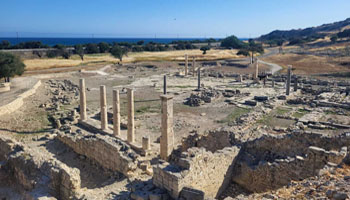
Amathous Archaeological Site
Amathous is one of the significant ancient city-kingdoms of Cyprus on Lemesos bay, which was probably founded by Eteocypriots in the 11th cent. B.C. At the Primary Archeological Site of Amathous one sees the ruins of the temple of Aphrodite. According to mythology, Greek hero Theseus left the pregnant Ariadne to be attended by local women. It was also an important site of worship of the Goddess Aphrodite-Astarte.
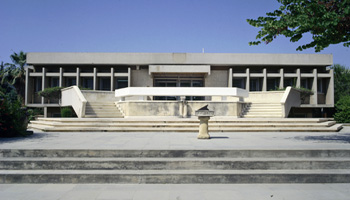
Archaeological Museum
The Archaeological Museum in Limassol is a particularly interesting sight for art and history lovers. The museum houses artefacts related to societal development of Cyprus, which include ceramics, pottery and antiquities from the Roman period. Also, on display are findings from the Neolithic until the Late Bronze Age. Sculptures, pottery, lamps and inscriptions with ancient Hellenistic and Roman koine catch the eye of many visitors.
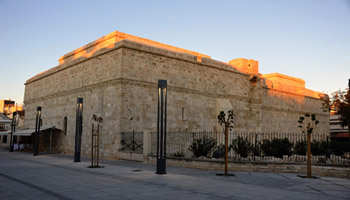
Limassol Castle
Limassol CastleThere is no doubt that Limassol Castle occupies the dominant position in the landmark and tourist attractions in the city. Richard the Lionheart is supposed to have married his fiancée Princess Berengaria of Navarre in this castle after her ship was grounded as she accompanied him to the Third Crusade, on his way to Holy Land. The Castle was used as a prison between 1790 and 1940 and it now serves as a medieval museum. The collection that the museum provides covers the era of 400 – 1870 AD. A visitor can see numerous exhibits: cannons, wood carvings of the 17th and 18th century, paintings and tombstones, statues, suits of armour, coins, terracotta, metalware and pottery, glass and marble articrafts.
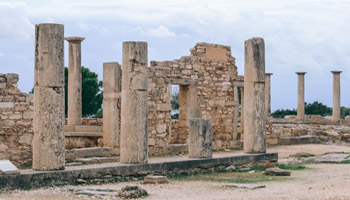
Sunctuary of Apollon Ylatis
Apollon Ylatis gold of the woodland, was the protector of Kourion. According to archaeological sources he was worshipped here from the 8th centuary BC to the 4th centuary AD. His sanctuary was an important religious centre.It consisted of Apollo's temple, which has been partly restored, pilgrim halls, the palestra, a bath complex and a holy precinct.
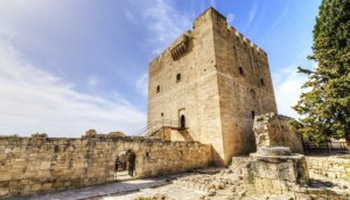
Kolossi Medieval Castle
The Kolossi Medieval Castle is situated in the village of Kolossi, 11 kilometres west of Limassol. A renowned archaeological site, the castle was built in the 15th century by the Knights of Saint John of Jerusalem on a land gifted by King Hugh I. Earlier, it used to be home to a 13th century fortress whose ruins are still visible in the castle. Later the castle was occupied by the Richard I of England and the Knights Templar.
